Evans Etrue Howard

Evans Etrue Howard

PhD candidate in Information and Communication Technology

University of L'Aquila

Biography

Evans Etrue Howard is a PhD Candidate in Information and Communication Technology at University of L’Aquila. His focuses on modeling and solving large-scale optimization problems. In the optimization domain specific research areas are Integer Programming, Network Optimization, Combinatorial Optimization and Scheduling.

His activities mainly concentrate on methods for finding provably good solutions (exact or heuristics) to emergengency evaacuation planning either pre- or post- disasters. Techniques been developed are applied to real life application of pedestrain evacuation.

Download my resumé.

Interests
  • Dynamic Evacuation Models
  • Artificial Intelligence
  • Information Retrieval
  • Network Optimization
  • (Robust) Combinatorial Optimisation
  • Social Network Analysis
  • Mixed Linear Integer Programming
  • Big Data Analytics and Mining
  • Discrete Optimization
  • Bayesian Optimization
Education
  • PhD in Information and Communication Technology, 2021 (Expected)

    University of L'Aquila

  • MSc in Mathematical Engineering, 2016

    University of L'Aquila

  • BSc in Mathematics, 2011

    Kwame Nkrumah University of Science and Technology

Skills

R

75%

Statistics

80%

Mathematical Optmization Modelling

80%

Python

80%

Unix

50%

Cloud Computing

65%

😄
Emojiness

100%

Experience


Research Assistant
Oct 2016 – Oct 2018 Varese

Responsibilities include:

  • Analysing
  • Modelling
  • Deploying
  • Exploration and Exploitation

Accomplish­ments

Coursera
Neural Networks and Deep Learning
See certificate
Formulated informed blockchain models, hypotheses, and use cases.
See certificate
DataCamp
Object-Oriented Programming in R: S3 and R6 Course
See certificate

Recent Publications

Quickly discover relevant content by filtering publications.
Definition of an Enriched GIS network for evacuation

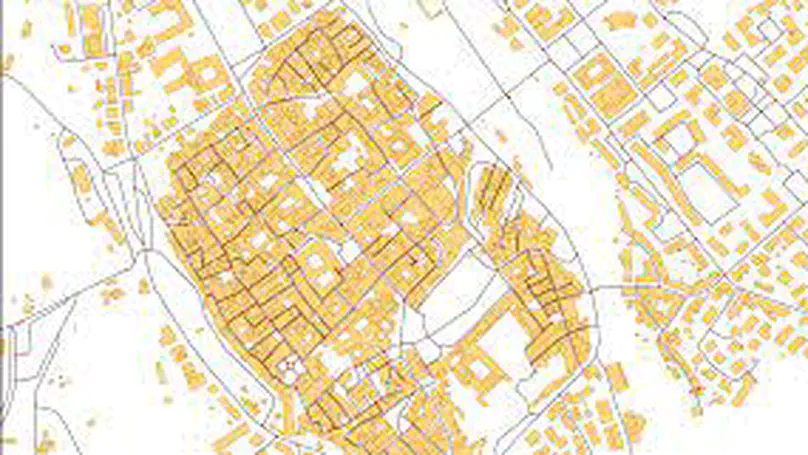
Among the most serious natural disasters, earthquakes cause severe damages to infrastructures and building, can kill or injure thousands of humans and animals and, in the luckiest circumstances, just make people homeless destroying communities, habitats, economies and mental equilibrium. In order to minimise the loss of lives, an effective evacuation plan to cope with worldwide disasters is required. In this paper we describe a novel approach to timely formulate an evacuation plan of an area struck by an earthquake. The proposed solution leverages on a two-steps modeling framework: i) a method that extracts from enriched GIS data a network description of the area to be evacuated; ii) a dynamic optimization model that calculates the safest paths citizens should follow to reach pre-identified safe areas. While the network is computed off-line at design time, the optimization model, or one of its reductions, can be embedded in a real-time system that, recomputing it several times, can guide citizen after a natural disaster even in case of high dynamic scenario. Our approach is demonstrated on a real study case: the medieval center of the Italian town of Sulmona, for which detailed GIS data with information on the urban structure and building vulnerability are available.

Definition of an Enriched GIS Network for Evacuation Planning:

Contact